
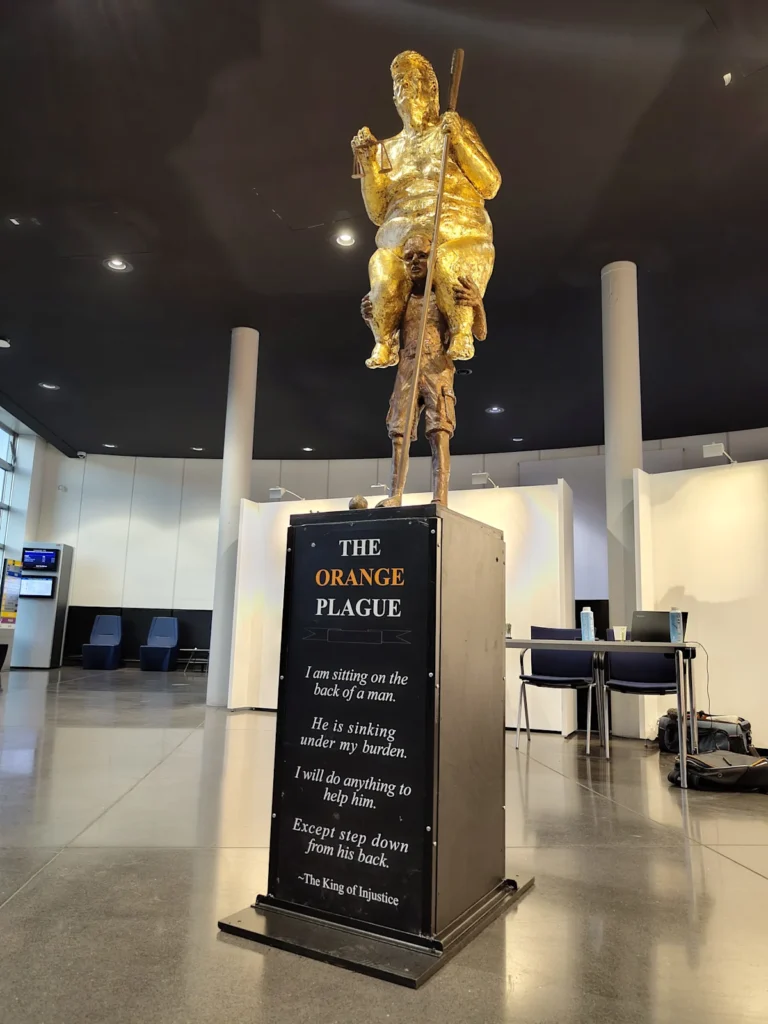
I applaud the courage of the sculptor, Danish artist Jens Galschiøt,
and the Strasbourg European Parliament for showing this work
A Danish artist brought an eight-and-a-half-foot sculpture to the European Parliament building in Strasbourg. It shows a naked, gold-covered Trump holding a golf club and scales of justice while a smaller man strains under his weight. The artist calls it The Orange Plague. A Danish member of Parliament invited him to show it there; it isn’t an official statement from the Parliament.
What do I allow to ride on my back? There are the obligations, the slurs, the negations people may push at me and I allow. In what ways do I do that to others? A major part of our human experience is learning to say yes, and to say no, all with kindness.
Our dharma practice gives us the opportunity to experience the tensions of giving and receiving, and how we separate into self and other. If someone is on my back, harming me, and I don’t say no, it’s both of our responsibility. I understand that sometimes we can’t see a way to get them off our back, but there will be a way, even if a slow path. In daily life, do I stand up to bullying, yet with compassion, not hatred, for the bully? Equally important, in what even subtle ways do I ride uninvited on others backs?
A very simple example. My bank of over 20 years merged with another bank 6 weeks ago. I filled out all the forms, visited the new bank in person, was able to get onto online banking last week, but today I can’t. Bills must be paid before I leave for retreat. As I’m typing this blog, I just spent an hour on the phone waiting for a bank supervisor who, when they finally connected, hung up because my deaf phone is so slow. Rage has arisen! They are on my back; but I’m also on theirs because rage is negative energy. What is the answer? You’re all familiar with such situations in your own life. How do we live our interconnections with love, and yet say “no” appropriately?
In the early 1990s, I had the opportunity to participate in Thich Nhat Hanh’s Plum Village Winter Retreat. The Women’s sangha gathered in a very old stone barn, rebuilt into a meditation hall, and heated though those cold November days with a large woodburning stove. The walls were all old field stone, pieced together. Every stone was essential to the whole. Remove one and the wall collapses!
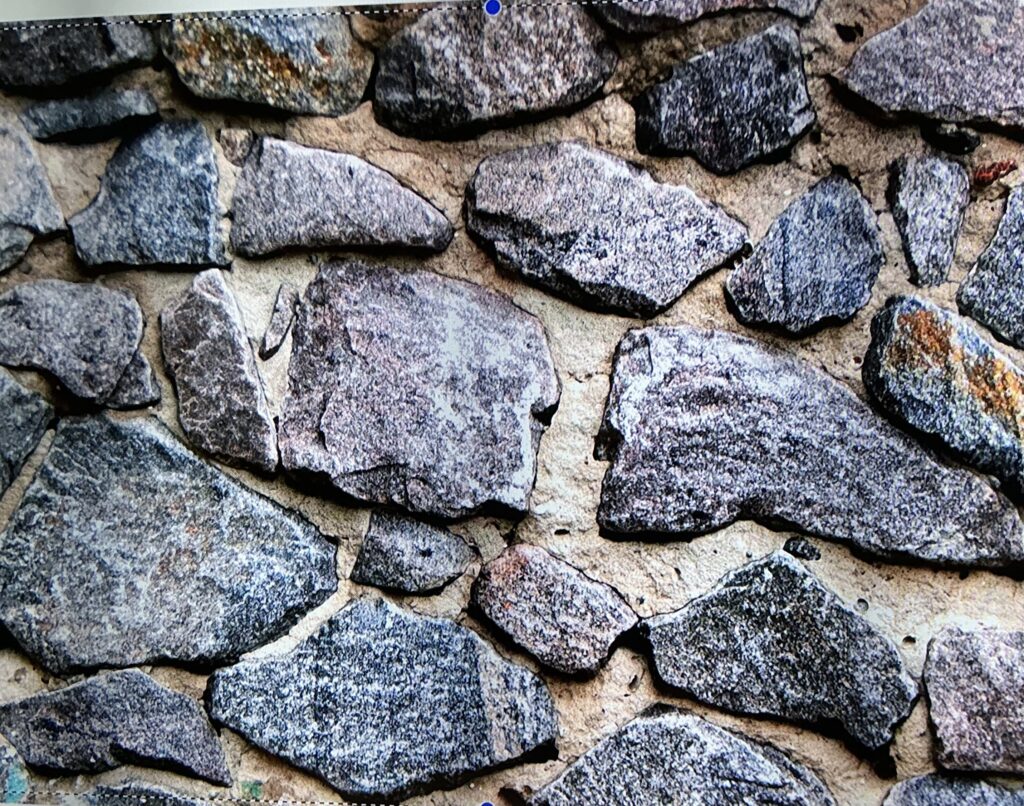
That Zen sangha’s practice was to sit with eyes open, so I committed to that. Day after day, hour after hour, I sat looking at that wall! I came away from those ten days with a much deeper inner understanding of interconnection. Even the smallest stone is essential. My “yes” is essential and my “no” is essential. And the energy behind the responses is essential. One can say either yes or no with kindness, or with some anger. It’s my responsibility to know what energies make up my responses and to take loving care of the harmful ones. This discernment is one fruit of my practice, and also the ability to speak out, with as much loving kindness as is possible, whether I’m saying yes or no.
Our country/ our world, has become so polarized. Saying no with anger only increases the polarization. Not saying no, just gritting my teeth and putting up with what feels wrong, also increases negativity. Here we are moving into the retreat, with these emotions, energy and confusion. All the rocks are interconnected and necessary. Every sentient being and every emotion in our world is interconnected and necessary. Can compassion and awareness say no to the people who are trying to cling to my back and to pull me down. Can I climb without harm, and never on others’ backs? Exploring this will be a personal intention for the upcoming retreat.
Our grandson climbing a rock wall
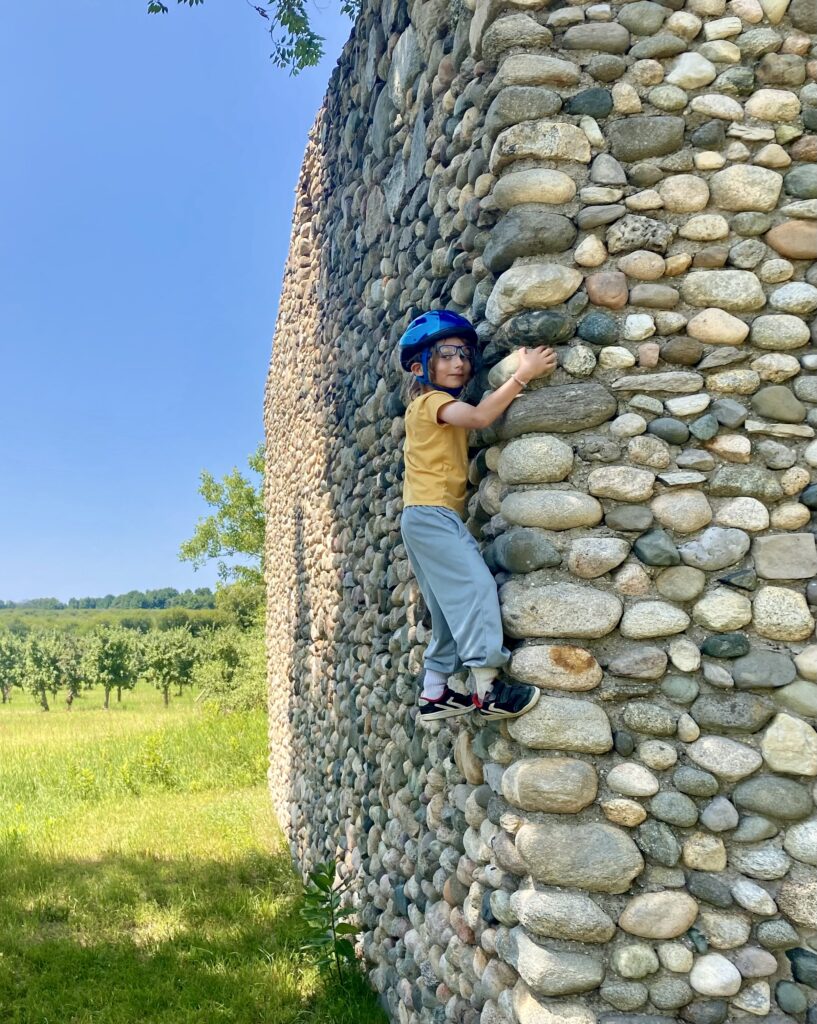
Is there any rock we could remove and the wall remain stable?